



Color Variation Can Break the Identity of an Entire Mirror Collection
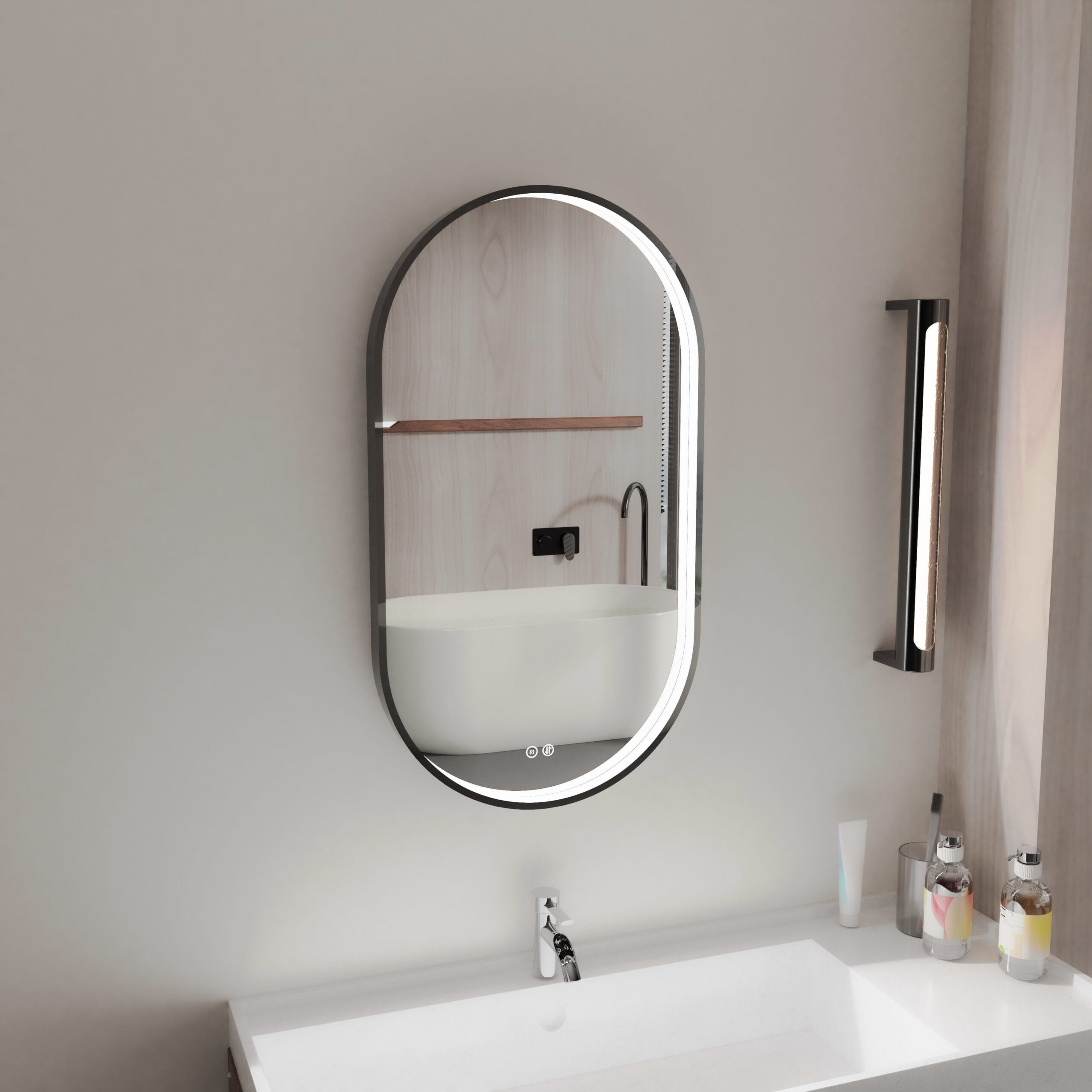
A black vanity mirror can look premium in an approved sample but inconsistent when production arrives in multiple sizes or batches. Shifts in color, gloss, texture, coating thickness, or corner coverage become obvious when products are displayed together. These defects can undermine a private-label collection, trigger retailer rejection, delay project installation, and create costly sorting or replacement work. A controlled coating specification, supported by reference samples, measurable limits, stable pretreatment, batch records, and consistent inspection, protects the buyer from visible mismatches before finished mirrors enter the market.
Consistent black vanity mirror finishes require an approved color and gloss standard, controlled substrate preparation, defined coating chemistry, measurable tolerances, cured-film testing, batch traceability, and standardized lighting for inspection. Our company supports Customizable OEM and ODM collections through coordinated samples, specifications, production controls, and shipment inspections.
Define the Black Finish Before Requesting Prices
Black is not a single finish. Two frames described as matte black may differ in undertone, gloss, surface texture, and response to lighting. The Manufacturer and buyer should convert the design intent into measurable production requirements.
Core Finish Parameters
- Color reference based on an approved physical master
- Color coordinates and permitted batch deviation
- Gloss level measured at an agreed geometry
- Surface texture, including smooth, fine texture, or coarse texture
- Coating thickness range
- Edge and corner coverage
- Permitted visual defects and inspection distance
- Resistance to humidity, cleaning chemicals, scratches, and corrosion
Digital images and screen colors are unsuitable as final approval references because displays, cameras, and room lighting reproduce black differently. A signed physical master sample should control mass production.
Select a Coating System for the Frame Material
The correct finish depends on whether the frame is aluminum, steel, stainless steel, or plastic. A Supplier should not approve a color independently from the actual substrate and pretreatment process.
| Finish System | Typical Substrate | Main Advantages | Consistency Risks |
|---|---|---|---|
| Powder coating | Aluminum or steel | Durable film, broad texture selection, efficient production | Gloss drift, orange peel, powder-lot variation, incomplete corner coverage |
| Wet paint | Metal or selected plastics | Flexible color matching and thin-film appearance | Solvent variation, runs, dust, uneven film build, curing differences |
| Black anodizing | Aluminum | Metallic appearance and integrated surface treatment | Shade variation caused by alloy, extrusion, surface finish, and bath conditions |
| PVD coating | Suitable metal surfaces | Decorative metallic black appearance and good wear potential | Substrate polish, chamber loading, and process variation |
| Decorative film or wrap | Selected frame structures | Repeatable pattern or specialty appearance | Seams, lifting, corner coverage, and moisture durability |
Powder Coating for Private-Label Collections
Powder coating is frequently selected for black vanity mirror frames because it supports durable matte and textured finishes. Consistency depends on more than the powder color code.
- Use the same approved powder Manufacturer and product reference.
- Control storage conditions and powder shelf life.
- Record powder batch numbers for every production lot.
- Maintain stable spray voltage, gun distance, and line speed.
- Monitor film thickness on flat surfaces, corners, and recessed areas.
- Verify oven temperature and actual metal curing conditions.
- Avoid mixing reclaimed powder without a controlled process.
Anodized and Metallic Black Finishes
Anodized black and PVD black may show more visual movement than opaque paint because the substrate contributes to the final appearance. Extrusion alloy, brushing direction, polishing quality, and component orientation must remain consistent across the collection.
Create a Measurable Finish Standard
A private-label specification should combine instrument readings with visual approval. Instruments improve repeatability, but they may not fully capture texture, metallic appearance, edge coverage, or differences visible under directional lighting.
| Control Parameter | Measurement Method | Approval Basis |
|---|---|---|
| Color | Spectrophotometer using agreed settings | Target coordinates and approved color-difference limit |
| Gloss | Gloss meter at the specified measurement angle | Approved range in gloss units |
| Coating thickness | Calibrated non-destructive thickness gauge | Minimum and maximum film range |
| Texture | Side-by-side visual and tactile comparison | Signed master panel or approved mirror frame |
| Adhesion | Applicable cross-cut or pull-off method | Project-specific acceptance classification |
| Cure quality | Approved solvent, hardness, or process verification | No softening, transfer, or unacceptable film damage |
| Corrosion resistance | Agreed humidity or corrosion exposure | Defined limits for blistering, rust, and underfilm spread |
| Visual defects | Inspection under controlled lighting and distance | Defect zones and acceptance criteria |
Use Color Difference Carefully
Color difference can be expressed using a Delta E calculation, but the permitted value should be agreed for the specific finish. Deep matte black, textured powder, and metallic surfaces can produce unstable readings if the instrument position, aperture, or measurement direction changes.
Measurement Conditions to Freeze
- Instrument model or equivalent capability
- Color space and color-difference formula
- Illuminant and observer settings
- Measurement aperture
- Number and location of readings
- Component orientation during measurement
- Calibration frequency
Control Gloss and Texture Together
Two frames may have similar color readings but still look different because one is smoother or glossier. Texture changes how light scatters across the surface, especially on broad frame sections and curved corners. Gloss and texture must therefore be approved together.
Build a Physical Master Sample System
The golden sample is the most practical reference for a black vanity mirror collection. It should represent the final substrate, pretreatment, coating, gloss, texture, frame geometry, and assembly method.
- Produce initial color panels using the intended coating system.
- Select the preferred color, gloss, and texture under representative lighting.
- Apply the approved finish to a complete mirror sample.
- Inspect flat sections, welds, corners, joints, and rear edges.
- Record instrument readings from designated locations.
- Sign and date control samples for the buyer and factory.
- Store masters away from sunlight, moisture, abrasion, and chemicals.
- Set a review period because reference panels can age or become damaged.
Approve the Whole Collection Together
A collection may include round, rectangular, arched, pill-shaped, and illuminated mirrors. Differences in extrusion profiles, welds, curves, and frame widths can alter the finish. All major constructions should be sampled together before mass production.
- Use consistent frame materials where possible.
- Align coating chemistry across all collection sizes.
- Match visible hardware, brackets, and accessories to the frame.
- Confirm that touch switches and LED diffusers do not change perceived color.
- Review products side by side under retail and bathroom lighting.
Control Substrate Preparation and Pretreatment
Coating quality begins before color is applied. Oil, oxidation, welding residue, scratches, and inconsistent sanding can create visible defects or premature adhesion failure.
Aluminum Frame Controls
- Standardize the alloy and extrusion source.
- Remove oil, dust, and processing residue.
- Control sanding or brushing direction.
- Use a verified pretreatment process.
- Protect prepared parts from contamination before coating.
Steel Frame Controls
- Remove rust, welding scale, oil, and sharp burrs.
- Prepare welds to match adjacent visible surfaces.
- Apply corrosion-resistant pretreatment.
- Prevent exposed steel at holes, corners, and hanging points.
- Inspect internal surfaces where bathroom humidity may enter.
Prevent Common Black-Coating Defects
Color or Gloss Mismatch
Mismatches often result from different powder lots, mixed suppliers, incorrect curing, film-thickness changes, or production on separate coating lines. Collection orders should be grouped into controlled batches whenever practical.
Thin Coverage at Corners
Sharp edges, deep channels, and welded corners can receive less coating than flat surfaces. Frame design, hanging orientation, spray access, and electrostatic settings should be reviewed before production.
Orange Peel and Surface Waves
Excessive texture may come from coating thickness, powder formulation, spray conditions, or curing. The visual limit should be compared with the approved sample under side lighting.
Dust, Pinholes, and Contamination
Black surfaces reveal dust and inclusions easily. Clean handling areas, filtered air, equipment maintenance, and protected cooling zones help reduce contamination.
Marks from Assembly and Packaging
A compliant coating can be damaged when the mirror is assembled or packed. Metal tools, foam abrasion, adhesive residue, and unsecured accessories can produce scratches or gloss marks.
Test Durability for Bathroom Conditions
Color consistency at shipment is only one requirement. The finish must also remain stable during cleaning, humid service, and normal handling.
- Adhesion testing on actual production substrates
- Humidity and condensation exposure
- Corrosion testing appropriate to the material and market
- Resistance to agreed bathroom cleaning agents
- Scratch and abrasion evaluation
- Thermal cycling for products with integrated lighting
- Inspection for fading, whitening, blistering, peeling, and rust
Test duration and acceptance criteria should be agreed before sampling. A generic test result from another substrate or coating color may not represent the finished black vanity mirror.
Maintain Batch Traceability and Change Control
A Wholesaler or private-label buyer should be able to connect each shipment with its material and coating records. Traceability makes it easier to contain problems without rejecting unrelated production.
Recommended Batch Records
- Frame material and extrusion batch
- Pretreatment date and process record
- Coating brand, product code, and lot number
- Spray line and production date
- Curing profile or oven verification
- Color, gloss, and thickness readings
- Inspection quantity and defect results
- Packaging and shipment identification
Any change to the substrate, powder source, coating formula, pretreatment, curing cycle, factory line, or reference master should require written approval. OEM and ODM customers should receive updated samples or validation data before the revised finish enters production.
Coordinate Quality Across Your Private-Label Program
As an export-focused Manufacturer and Supplier, our company can coordinate Customizable frame shapes, black coating systems, color masters, inspection criteria, logo packaging, and production traceability. This structured approach helps retailers, project buyers, and Wholesaler partners maintain one recognizable finish across multiple mirror models and repeat orders.
Start Your Black Finish Approval
Send us your mirror designs, frame material, finish reference, target market, and order plan. Request an OEM or ODM sample review today to establish measurable color, gloss, durability, inspection, and packaging standards for your private-label black vanity mirror collection.


 English
 Español
 Deutsch
 Français
 日本語
 Nederlands
 Português
 한국어
 Italiano
 Svenska