



A vague RFQ for a custom LED bathroom mirror may look faster to prepare, but it often creates more work later. Missing dimensions, lighting requirements, materials, packaging details, or installation expectations can lead to inconsistent quotations, repeated questions, unexpected costs, and delayed samples. For a Wholesaler or brand owner comparing several suppliers, an unclear brief also makes it difficult to determine which Supplier offers the best value. A structured RFQ gives the Manufacturer a clear technical and commercial target, allowing both sides to evaluate feasibility, cost, lead time, and customization requirements more efficiently.
A strong LED bathroom mirror RFQ should define dimensions, materials, lighting, functions, installation, packaging, quantity, certifications, and customization requirements. Lofter supports OEM and ODM projects with integrated manufacturing, helping buyers turn clear specifications into reliable production plans.
What Should an RFQ Brief for an LED Bathroom Mirror Include?
A professional RFQ should give the Manufacturer enough information to calculate cost and production requirements without making assumptions. The goal is not to create a complicated technical document. The goal is to remove uncertainty from the quotation.
For a custom LED bathroom mirror, the RFQ should normally cover:
- Product dimensions and shape
- Glass specifications and thickness
- Frame and backing requirements
- LED lighting configuration
- Switch and control functions
- Power and electrical requirements
- Defogging or other functional requirements
- Installation method
- Packaging requirements
- Target order quantity
- Target market and compliance requirements
- OEM or ODM customization requirements
Providing these details at the beginning allows each Supplier to quote against the same specification, making comparison much more meaningful.
Start With the Product Definition
The first part of the RFQ should identify exactly what you want to purchase. Avoid relying only on a product name such as custom LED bathroom mirror because different suppliers may interpret the same description differently.
Define Size, Shape, and Construction
Specify the mirror dimensions, tolerance expectations, shape, orientation, and overall construction. If you have a technical drawing, product image, or reference sample, include it with the RFQ.
For example, the brief can specify:
- Overall width and height
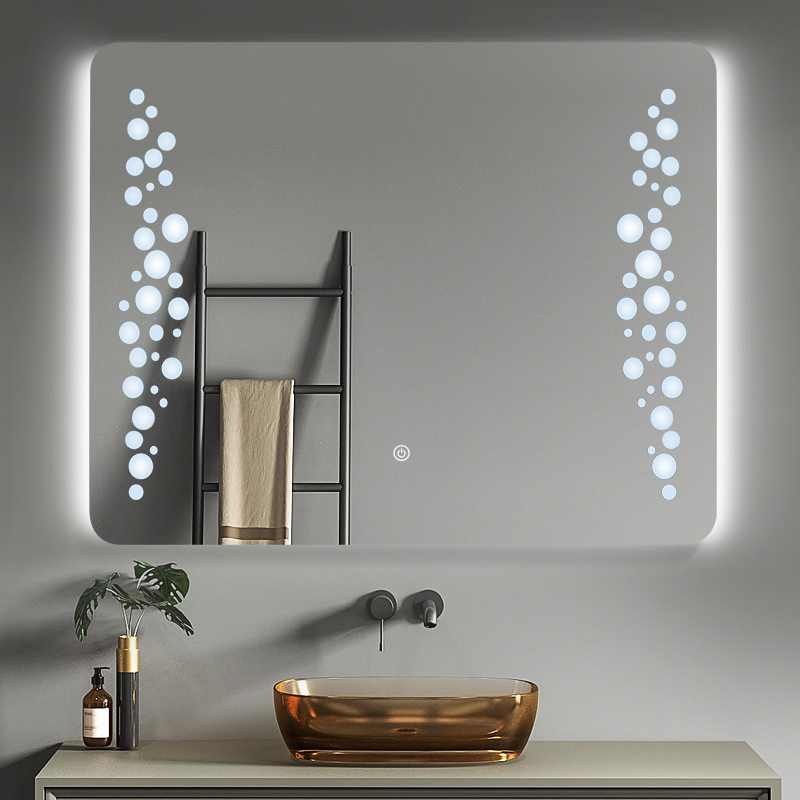
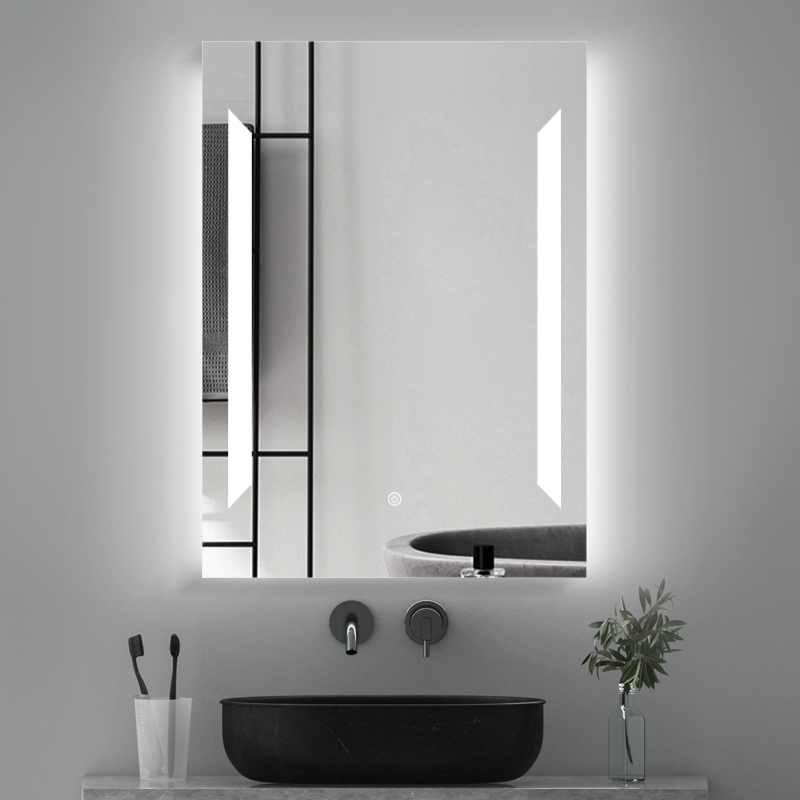
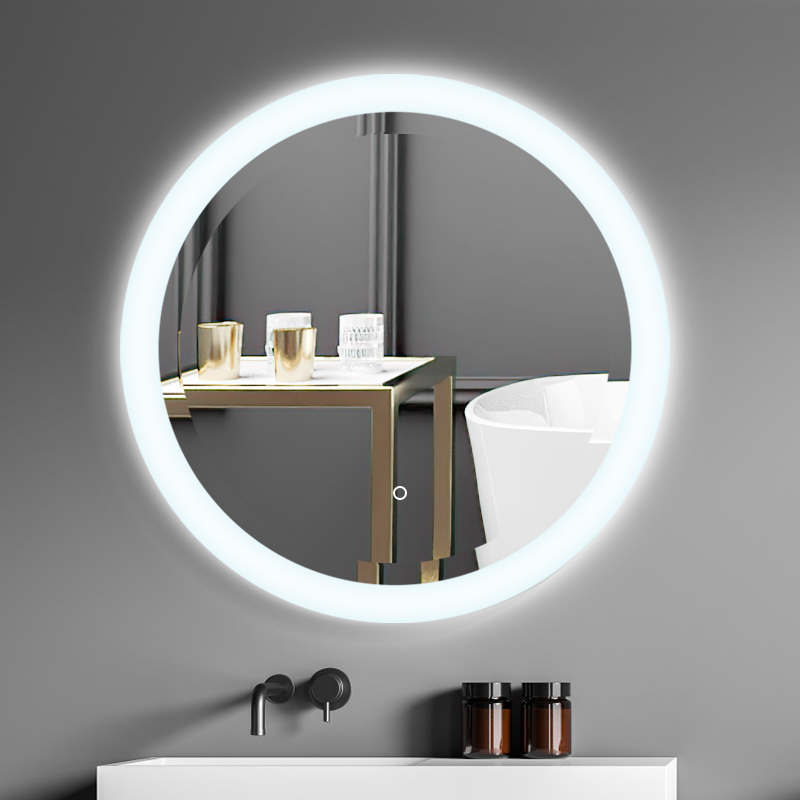
- Round, rectangular, irregular, or custom shape
- Mounting orientation
- Glass thickness
- Edge treatment
- Frame or frameless construction
- Back panel requirements
These details are important because changes in size, shape, glass processing, and construction can directly influence material consumption, processing time, packaging, and final pricing.
Specify LED Lighting and Electrical Requirements
Lighting is one of the most important areas to define in an LED bathroom mirror RFQ. A supplier cannot provide a reliable quotation if the lighting configuration remains unclear.
Separate Standard Features From Custom Features
Clearly identify which functions are mandatory and which are optional. This prevents suppliers from including different features in their quotations and makes price comparison easier.
| RFQ Item | Information to Provide | Why It Matters |
|---|---|---|
| LED lighting | Lighting position and configuration | Affects materials, assembly, and cost |
| Color temperature | Required lighting tone or range | Ensures visual consistency |
| Control | Touch, sensor, switch, or other control | Changes electrical configuration |
| Power | Input and electrical requirements | Supports correct component selection |
| Additional functions | Defogging or other requested features | Influences product structure and quotation |
If the product is intended for a specific market, include the destination market early. Electrical requirements and compliance expectations can differ between markets, and the Supplier should evaluate them before production planning.
Explain the Customization Requirements Clearly
Custom products require more than a product name. If you are requesting Customizable features, separate your requirements into design, materials, functions, branding, and packaging.
OEM and ODM RFQ Requirements
For an OEM project, the buyer may already have a complete design and expects the Manufacturer to produce according to approved specifications. For an ODM project, the Supplier may contribute more to product development, engineering, or design optimization.
Your RFQ should therefore state which model you need:
- OEM production based on an existing buyer specification.
- ODM development based on a concept or functional requirement.
- Modification of an existing supplier model.
- Fully Customizable development for a new product program.
Also clarify branding requirements such as logo placement, labels, manuals, cartons, and other private label elements. This allows the Manufacturer to include the correct production and packaging processes in the quotation.
Include Quantity, Packaging, and Commercial Information
A technical specification alone is not enough for an effective RFQ. Suppliers need commercial information to evaluate production planning and logistics.
- Estimated sample quantity
- Initial order quantity
- Expected annual volume if available
- Target delivery schedule
- Destination country or region
- Packaging requirements
- Private label requirements
- Expected quotation validity
- Sample development expectations
For a Wholesaler planning regular orders, sharing an estimated annual volume can also help the Supplier understand the potential scale of the program rather than treating the request as a one time purchase.
Ask Suppliers to Quote on the Same Basis
One of the biggest advantages of a structured RFQ is the ability to compare quotations fairly. If each Supplier quotes a different configuration, the lowest price may not represent the lowest actual purchasing cost.
| Quotation Category | Buyer Should Request |
|---|---|
| Unit price | Price based on clearly stated quantity and specification |
| Sample cost | Development and sample pricing |
| Tooling or development | Any one time engineering or tooling charges |
| Lead time | Sample and mass production lead times |
| Packaging | Standard and customized packaging costs |
| Payment | Proposed payment terms |
| Validity | Quotation validity period |
Ask every Supplier to identify exclusions and assumptions. This is particularly important for Customizable LED bathroom mirrors because seemingly small specification differences can create substantial cost differences.
Attach the Right Reference Materials
A strong RFQ is easier to understand when text is supported by visual and technical references. If possible, provide drawings, reference photographs, sketches, product links, or approved samples.
Useful RFQ Attachments
- Dimension drawings
- Reference product photographs
- Electrical diagrams when available
- Logo and branding files
- Packaging artwork
- Installation references
- Existing product specifications
- Sample approval criteria
When a drawing and written description conflict, state which document takes priority. This simple step can prevent misunderstandings during quotation and sampling.
Use a Simple RFQ Workflow
Buyers can prepare a professional LED bathroom mirror RFQ using a repeatable process.
- Define the target product and application.
- Confirm dimensions, glass, construction, and installation.
- Specify LED and electrical functions.
- Separate mandatory requirements from optional features.
- Define OEM, ODM, branding, and customization needs.
- Provide estimated quantities and delivery expectations.
- Specify packaging and destination requirements.
- Attach drawings, images, and reference materials.
- Request suppliers to list assumptions and exclusions.
- Compare quotations against the same specification.
This workflow turns an RFQ from a simple request for price into a practical supplier evaluation document.
How Lofter Can Support Custom LED Bathroom Mirror Projects
The right RFQ should help both the buyer and Manufacturer move quickly from concept to production. Lofter integrates cutting, coating, assembly, and wiring under one roof, with an independent glass hardware processing and assembly workshop.
Lofter also conducts in house testing for durability, lighting performance, and safety, supported by two electrical R&D teams and four QCS. For buyers developing OEM, ODM, or Customizable mirror programs, this integrated structure provides a practical foundation for discussing design requirements, production feasibility, and quality expectations from the beginning.
Turn Your RFQ Into a Better Purchasing Decision
A complete RFQ reduces quotation ambiguity, improves supplier comparison, and gives your LED bathroom mirror project a clearer path from specification to production. Prepare your requirements before requesting prices, then send your RFQ to Lofter to discuss OEM, ODM, and Customizable solutions for your next mirror program.

 English
 Español
 Deutsch
 Français
 日本語
 Nederlands
 Português
 한국어
 Italiano
 Svenska