



Is your mirror too small to be functional or too large for your room’s design balance?
Choosing the correct mirror size depends on vanity width, room dimensions, and intended use. Most designers recommend that a mirror be slightly narrower than the vanity. Understanding bathroom mirror dimensions, mirror standard sizes, and proper installation guidelines helps create a balanced, functional, and visually appealing space.
Let’s explore sizing rules, design trends, and expert selection tips.
Why Does Mirror Size Matter So Much?
When designing a bathroom, salon, dressing room, or decorative space, many homeowners focus on mirror shape and style while overlooking one of the most important factors: mirror size. The size of a mirror directly affects functionality, aesthetics, lighting reflection, and the perceived size of a room.
A properly sized mirror can make a compact bathroom feel larger, brighten darker spaces, and create a stronger visual focal point. On the other hand, an incorrectly sized mirror can disrupt balance and make even a beautifully designed room feel awkward.
Modern consumers increasingly seek mirrors that combine practicality with sophisticated design. Whether selecting a vanity mirror, illuminated bathroom mirror, salon mirror, or decorative wall mirror, understanding proportion is essential.
At Lofter, our fully integrated production line allows us to manufacture mirrors in a wide range of dimensions and styles. By controlling every stage of production—from glass processing to final quality inspection—we ensure exceptional product consistency, durability, and design flexibility.
What Are the Most Common Mirror Standard Sizes?
Understanding mirror standard sizes provides an excellent starting point when choosing a new mirror. While custom sizing is increasingly popular, several standard dimensions dominate residential and commercial markets.
Common bathroom mirror sizes include:
- 24″ × 36″
- 30″ × 36″
- 36″ × 36″
- 48″ × 36″
- 60″ × 36″
- 72″ × 36″
For full-length mirrors, typical dimensions include:
- 48″ × 14″
- 59″ × 16″
- 65″ × 22″
- 71″ × 28″
These sizes are designed to accommodate most room layouts while maintaining visual harmony.
However, standard dimensions are only guidelines. Factors such as vanity width, ceiling height, and overall room design often influence the ideal mirror selection.
At Lofter, our integrated manufacturing capabilities allow us to produce both standard and custom-sized mirrors. This flexibility enables homeowners, designers, hotels, and commercial buyers to obtain products perfectly tailored to their projects.
How Big Should Bathroom Mirror Be Over Vanity?
One of the most frequently searched questions is how big should bathroom mirror be over vanity. The answer depends on both functionality and design proportion.
A widely accepted design rule suggests that the mirror should be 2–6 inches narrower than the vanity. This creates a balanced appearance while preventing the mirror from visually overwhelming the space.
For example:
- 24-inch vanity → 18–22-inch mirror
- 36-inch vanity → 30–34-inch mirror
- 48-inch vanity → 42–46-inch mirror
- 60-inch vanity → 54–58-inch mirror
When evaluating size of mirror over vanity, homeowners should also consider lighting placement, faucet height, backsplash dimensions, and wall space.
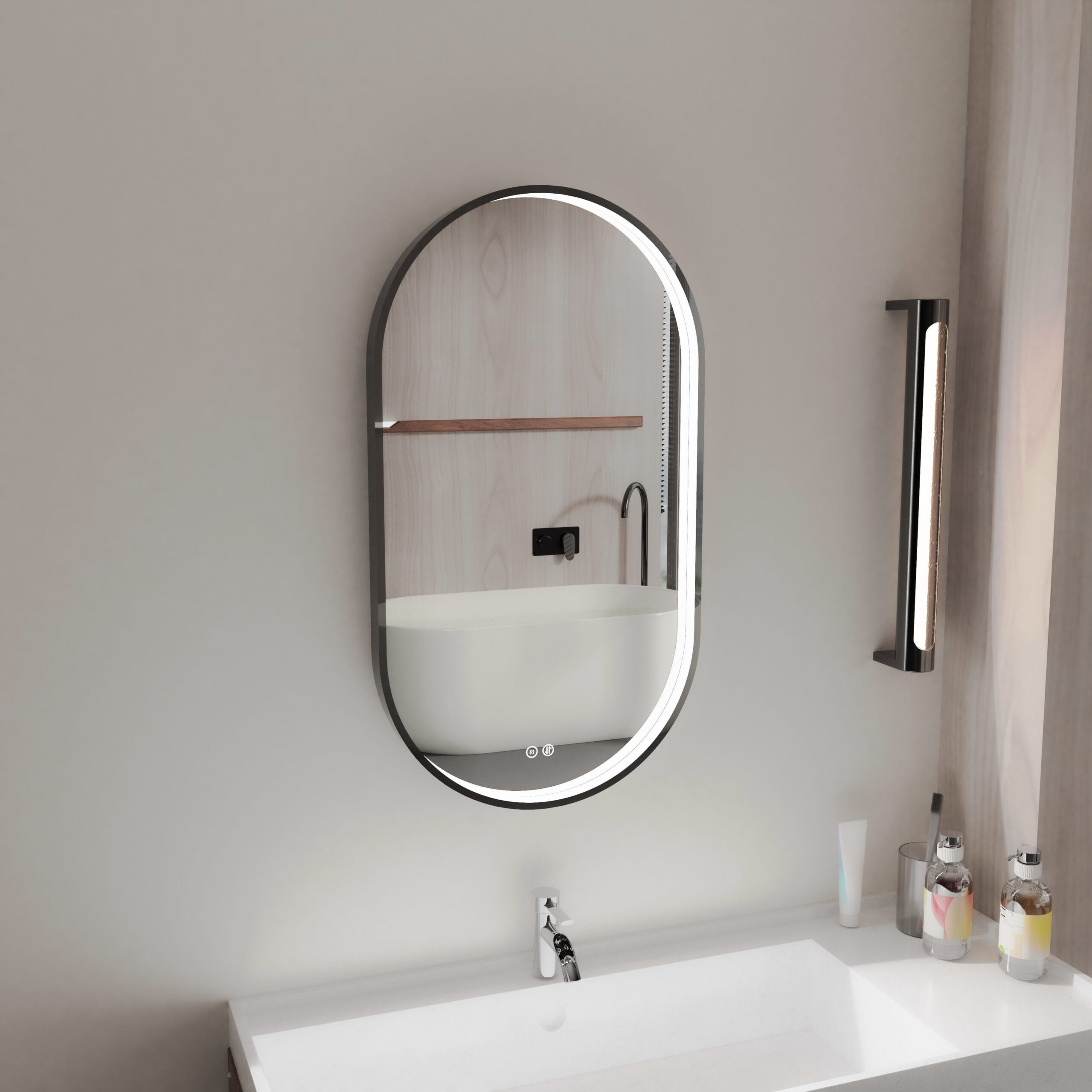
Large mirrors are particularly popular in contemporary bathrooms because they maximize light reflection and create a more spacious feel. Frameless designs further enhance this effect.
At Lofter, our professional design and manufacturing teams help customers determine the ideal mirror dimensions for both residential and commercial installations, ensuring outstanding functionality and visual appeal.
How Big Should Vanity Mirror Be for Single and Double Vanities?
The question how big should vanity mirror be varies depending on whether the bathroom features a single or double vanity configuration.
For single vanities, designers typically recommend a mirror that occupies approximately 70–90% of the vanity width. This maintains symmetry while providing ample reflection area.
For double vanities, there are two common approaches:
One Large Mirror
A single oversized mirror spanning most of the vanity length creates a sleek and modern appearance.
Two Separate Mirrors
Individual mirrors above each sink create a more personalized and symmetrical design.
When determining the size of vanity mirror, it is important to balance practical usage with overall aesthetics. Oversized mirrors are increasingly favored in luxury bathroom designs because they reflect more light and visually expand the room.
Lofter’s extensive product range includes illuminated mirrors, smart mirrors, frameless mirrors, and custom solutions designed to meet a wide variety of installation requirements.
What Bathroom Mirror Dimensions Work Best for Different Spaces?
Selecting the proper bathroom mirror dimensions depends largely on room size, vanity style, and user preferences.
Small Bathrooms
Compact mirrors prevent visual clutter while preserving wall space.
Medium Bathrooms
Standard-sized mirrors typically provide the best balance between function and aesthetics.
Large Bathrooms
Oversized mirrors create dramatic focal points and maximize brightness.
Luxury Bathrooms
Custom dimensions often deliver the most seamless integration with premium vanity systems and architectural features.
An effective bathroom mirror size guide should always consider:
- Vanity width
- Ceiling height
- Lighting fixtures
- Room proportions
- User requirements
Many designers recommend prioritizing proportion rather than simply choosing the largest available mirror.
At Lofter, our fully integrated production system allows us to manufacture mirrors across a wide range of dimensions, ensuring optimal compatibility with modern residential and commercial environments.
How Is Mirror Size Influencing Future Design Trends?
The future of mirror design is increasingly shaped by consumer demand for larger, smarter, and more multifunctional products. As technology becomes integrated into everyday living spaces, mirror sizing strategies are also evolving.
Current trends include:
- Oversized bathroom mirrors
- Full-wall mirror installations
- Backlit LED mirrors
- Smart mirrors with integrated displays
- Custom-sized decorative mirrors
Larger mirrors provide greater functionality while supporting contemporary minimalist aesthetics. They also improve light distribution, making interiors feel more open and inviting.
The growing popularity of luxury hotel-inspired bathrooms has further increased demand for expansive mirror designs. Consumers now view mirrors as architectural elements rather than simple accessories.
At Lofter, we continuously invest in advanced manufacturing technologies and product innovation. Our vertically integrated production process enables us to respond quickly to changing market trends while maintaining superior quality and performance standards.
How Can You Choose the Perfect Mirror Size?
Selecting the ideal mirror size begins with understanding your specific application and design goals.
Consider the following factors:
Vanity Width
The mirror should generally be slightly narrower than the vanity.
Room Dimensions
Larger rooms can accommodate larger mirrors without appearing overwhelming.
Lighting Requirements
LED mirrors often benefit from additional reflective surface area.
Design Style
Contemporary designs often favor oversized mirrors, while traditional spaces may use more moderate proportions.
Installation Location
Different rooms require different sizing strategies.
Following a comprehensive bathroom mirror size guide helps homeowners avoid common mistakes and achieve a more balanced, functional result.
At Lofter, our experienced team provides professional guidance, technical support, and factory-direct value to help customers select mirror solutions that perfectly suit their needs.
Conclusion
Choosing the right mirror size is essential for achieving both functional performance and visual harmony. By understanding bathroom mirror dimensions, mirror standard sizes, how big should vanity mirror be, how big should bathroom mirror be over vanity, and the ideal size of mirror over vanity, homeowners and designers can create more attractive and efficient spaces.
At Lofter, we combine a fully integrated production line, premium materials, advanced manufacturing technologies, and professional technical support to deliver reliable, high-quality mirror solutions. Whether for bathrooms, salons, hotels, dressing rooms, or decorative interiors, Lofter remains committed to helping customers create beautiful, practical, and future-ready spaces with confidence.
 English
 Español
 Deutsch
 Français
 日本語
 Nederlands
 Português
 한국어
 Italiano
 Svenska