



Confused about mirror placement and worried that the wrong height could ruin your room’s appearance and functionality?
The ideal mirror height depends on its location and purpose. Generally, the center of a mirror should align with average eye level, while vanity and console table mirrors require specific spacing for both functionality and visual balance. Proper mirror placement enhances comfort, lighting, and room aesthetics.
Keep reading to learn the best mirror heights, placement rules, and professional design tips.
Why Does Mirror Height Matter More Than Most Homeowners Realize?
Mirror placement is one of the most overlooked aspects of interior design. While many homeowners focus on shape, frame style, or size, the installation height often has a greater impact on functionality and visual appeal. A perfectly designed mirror can feel awkward if it is mounted too high or too low.
Proper mirror height improves daily usability, allowing users to comfortably view their reflection without straining. It also helps maximize natural and artificial light, making rooms appear larger and brighter. Whether installed in bathrooms, bedrooms, hallways, or living spaces, mirrors should be positioned according to the room’s purpose and the users’ needs.
At Lofter, we understand that successful mirror installations begin with precise design and engineering. Our fully integrated manufacturing process ensures exceptional dimensional accuracy, premium glass quality, and reliable performance. By selling directly to consumers, we help customers achieve professional-level results while maintaining competitive pricing and excellent technical support.
How High to Hang a Vanity Mirror for the Best Results?
One of the most common questions homeowners ask is how high to hang a vanity mirror. The answer depends on several factors, including vanity height, mirror dimensions, and the height of the users.
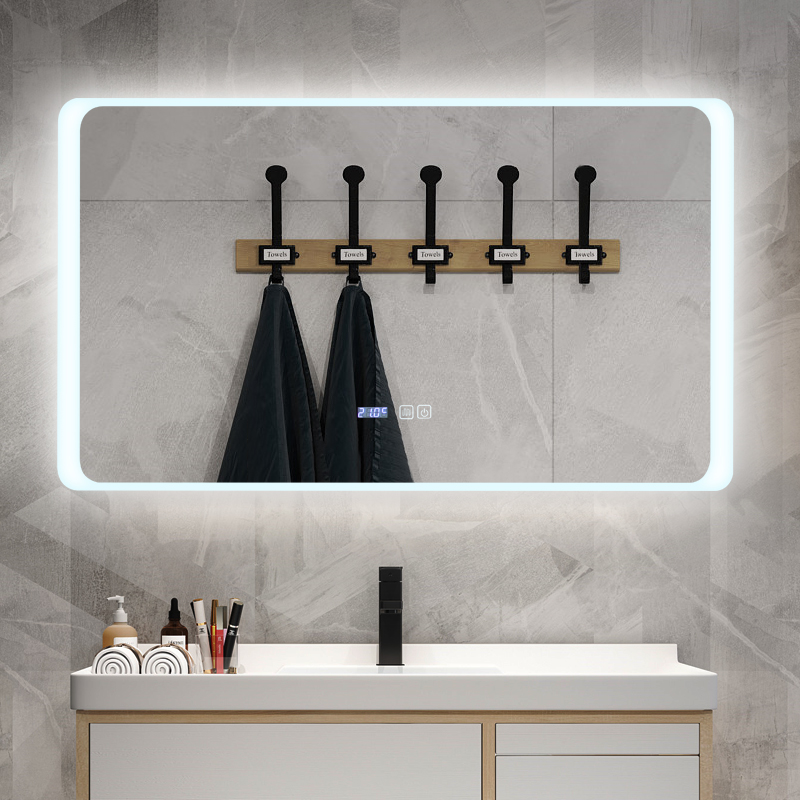
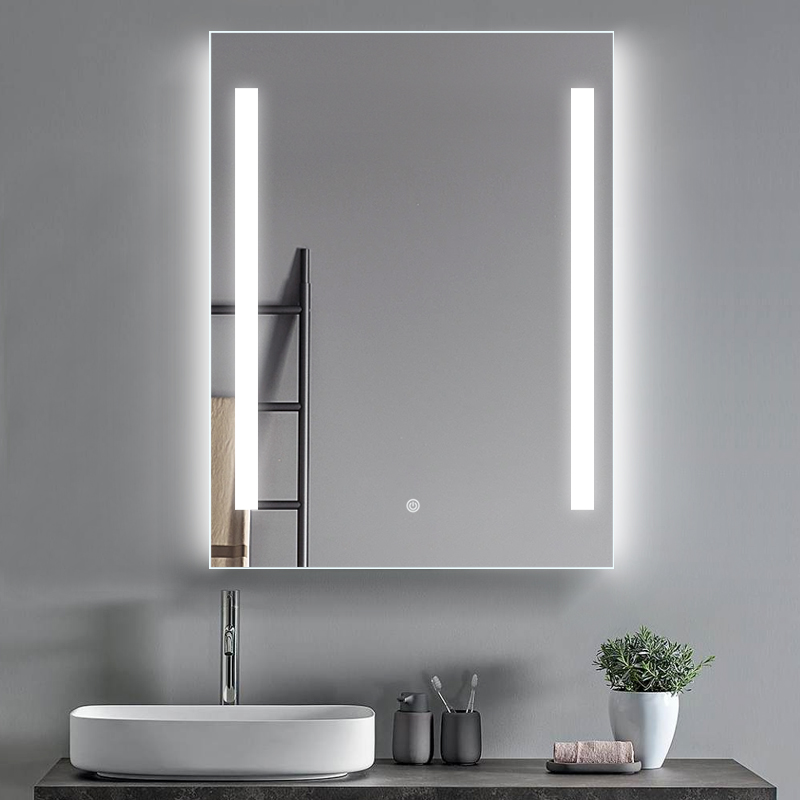
As a general guideline, the center of the mirror should be positioned close to the average eye level of the primary users. In most bathrooms, installers leave approximately 5 to 10 inches of space between the countertop and the bottom edge of the mirror. This placement creates a comfortable viewing experience while maintaining balanced proportions.
When determining mirror height from vanity, it is important to consider lighting fixtures, faucets, and backsplash materials. A mirror placed too close to the sink can appear cramped, while excessive spacing may reduce visual cohesion. Proper alignment ensures both functionality and aesthetic harmony.
Lofter manufactures premium bathroom mirrors with precise dimensions and multiple installation options. Our quality-controlled production system helps homeowners and designers achieve optimal placement while ensuring durability in moisture-rich bathroom environments.
What Is the Recommended Mirror Height From Vanity?
Understanding the correct mirror height from vanity is essential for creating a bathroom that feels both practical and luxurious. While there is no universal measurement suitable for every installation, industry professionals often recommend maintaining a gap of approximately 5 to 10 inches between the vanity countertop and the mirror.
The ideal spacing depends on vanity size, sink configuration, and mirror dimensions. Larger mirrors can often be installed slightly closer to the vanity because their proportions naturally balance the available wall space. Smaller mirrors may require more careful positioning to avoid appearing disconnected from the vanity below.
Homeowners should also consider family members’ heights. The mirror should comfortably accommodate the majority of users without requiring awkward posture adjustments. Proper installation contributes to a better daily grooming experience and enhances the overall visual balance of the bathroom.
At Lofter, our experienced engineering and manufacturing teams ensure that every mirror is produced with precision. Our direct-to-consumer model enables customers to access premium-quality products while benefiting from professional guidance throughout the selection and installation process.
How High to Hang Mirror Over Console Table in Entryways and Living Rooms?
Another frequently asked design question is how high to hang mirror over console table. In entryways, living rooms, and hallways, mirrors often serve both decorative and functional purposes. The goal is to create a visually balanced arrangement that complements the furniture below.
Most interior designers recommend leaving approximately 6 to 10 inches between the top of the console table and the bottom of the mirror. This spacing helps visually connect the two elements while preventing the mirror from appearing detached from the furniture arrangement.
The size of the mirror also influences placement. Larger mirrors generally create a stronger focal point and can make narrow hallways appear wider. Decorative frames may require slight adjustments to maintain visual balance.
Lofter offers a wide range of decorative mirrors suitable for entryways, living spaces, and hospitality projects. Through our integrated production facilities, we maintain strict quality standards while offering contemporary designs that elevate any interior environment.
What Is the Mirror Above Bed Meaning in Interior Design?
Many homeowners encounter the concept of mirror above bed meaning when decorating bedrooms. While mirrors above beds have been used for decades, their purpose varies depending on design style, cultural preferences, and personal taste.
From a design perspective, mirrors above beds help create visual depth and reflect light throughout the room. They can make smaller bedrooms feel more spacious and add sophistication to the overall décor. Decorative mirrors positioned above headboards often serve as artistic focal points that enhance the room’s character.
Some homeowners associate mirror placement above beds with symbolic or cultural interpretations, while others simply appreciate the aesthetic benefits. Regardless of personal beliefs, proper sizing and secure installation remain essential for safety and visual harmony.
At Lofter, we prioritize both beauty and structural integrity. Our mirrors are manufactured using high-quality materials and rigorous quality-control procedures, ensuring safe, reliable performance in residential and commercial applications.
What Common Mistakes Should You Avoid When Installing Mirrors?
Even premium mirrors can fail to achieve their intended effect if installed incorrectly. One common mistake is prioritizing wall space over user comfort. Mirrors should serve the people using them rather than simply filling an empty area.
Another frequent issue is selecting a mirror that is too small or too large relative to surrounding furniture. Proper proportions are critical for achieving visual balance. Incorrect spacing above vanities or console tables can also disrupt the room’s design flow.
Lighting considerations are equally important. Mirrors should reflect natural light whenever possible and work harmoniously with artificial lighting sources. Poor placement can create shadows, glare, or reduced visibility.
Lofter’s technical support team helps customers avoid these challenges by providing expert guidance on mirror sizing, installation, and application requirements. Combined with our integrated manufacturing capabilities, this ensures superior results for every project.
How Is Lofter Setting New Standards in Mirror Manufacturing?
As consumer expectations continue to evolve, mirror manufacturers must focus on quality, innovation, and customer satisfaction. Lofter’s fully integrated manufacturing model allows us to oversee every stage of production, from raw material sourcing to final quality inspection.
This approach enables us to maintain exceptional consistency, improve production efficiency, and deliver products that meet the highest industry standards. Our extensive product range includes bathroom mirrors, vanity mirrors, salon mirrors, decorative mirrors, and customized solutions for commercial applications.
Direct sales through our independent website allow customers to access premium-quality mirrors without traditional retail markups. Combined with professional technical support, fast communication, and reliable product performance, this creates a superior customer experience.
As interior design trends continue to emphasize functionality and personalization, Lofter remains committed to delivering innovative mirror solutions that combine aesthetics, durability, and long-term value.
Conclusion
Choosing the correct mirror height is essential for maximizing functionality, comfort, and visual appeal. Whether you’re determining how high to hang a vanity mirror, calculating the ideal mirror height from vanity, deciding how high to hang mirror over console table, or exploring the mirror above bed meaning, proper placement can dramatically improve your space.
Lofter combines a fully integrated manufacturing process, direct-to-consumer sales model, premium craftsmanship, and expert technical support to deliver reliable, high-performance mirror solutions. When quality, precision, and design excellence matter, Lofter is the trusted choice for your next mirror project.


 English
 Español
 Deutsch
 Français
 日本語
 Nederlands
 Português
 한국어
 Italiano
 Svenska