


What is a smart bathroom mirror?
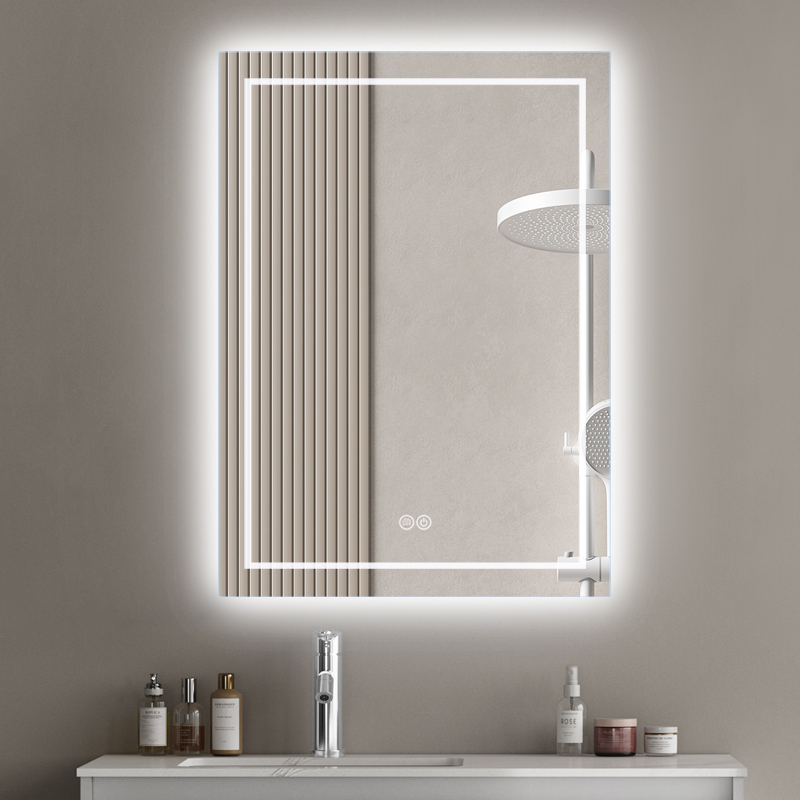
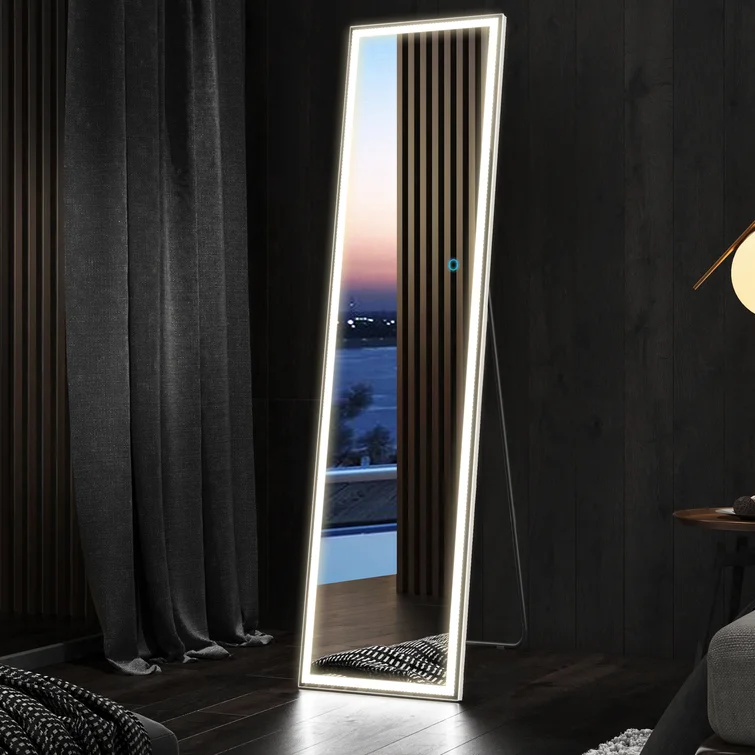
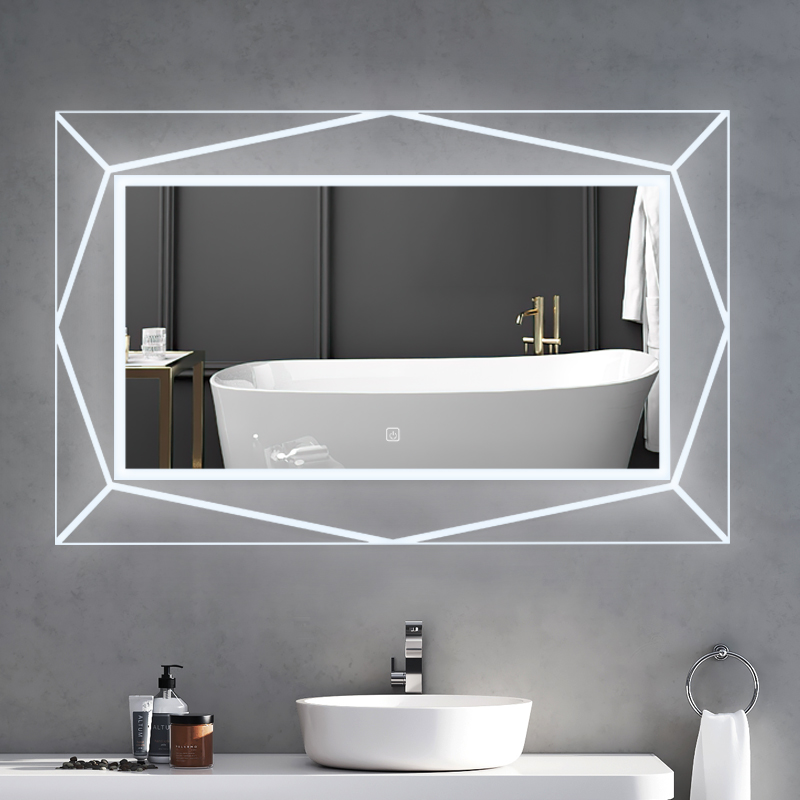
A smart bathroom mirror, transcending the traditional mirror’s reflective functionality, embodies a fusion of technology and convenience designed for the modern lifestyle. It integrates features such as LED lighting, touch screen controls, Bluetooth connectivity, anti-fog capabilities, and sometimes even voice control, allowing users to access a variety of functions without leaving the comfort of their bathroom.
Hangzhou Lofter Opto-Elec Tech Co., Ltd., specializing in the intersection of technology and home living, smart bathroom mirrors represent a frontier of innovation, blending aesthetic elegance with practical, tech-savvy solutions to enhance daily routines and elevate the user experience in personal spaces.
Control of smart bathroom mirror
Touch screen control
LCD Interactive Display: The mirror incorporates a touch-sensitive surface, enabling users to interact with it much like they would with a smartphone or tablet. This can include tapping, swiping, and long-pressing to navigate through menus, apps, and settings.
Customizable Interface: Users can customize the display according to their preferences, selecting which widgets or information to show, such as time, weather, news headlines, or health metrics.
Connectivity and Integration: Touch screen mirrors often integrate with other smart home devices or apps, allowing for control of lighting, thermostats, or even playback of music and videos, offering a centralized control point within the bathroom.
Motion Sensing
How It Works: Motion sensing technology utilizes infrared sensors or other motion detectors to sense the presence of a person in front of the mirror. This technology can automatically activate or deactivate the mirror’s display or features based on movement.
Applications: Motion sensing is ideal for energy-saving purposes. It turns on the mirror when someone approaches and automatically turns off the mirror lighting function when no one is detected for a specific period of time, such as 5 or 10 seconds. It can also trigger specific functions when it detects a user’s presence, such as lighting adjustments or displaying the day’s agenda.
Voice Control
How It Works: Voice control integrates with app, allowing users to issue voice commands directly to the mirror. The smart mirror processes these commands to perform various tasks. This usually requires smart mirrors to connect to the local smart ecosystem and interact through smart voice assistants, such as Apple’s Siri, Google’s Home, Amazon’s Alexa, and domestic Xiaodu, Xiaomi, etc. Smart voice assistants can be peripherals or It is a built-in device.
Applications: Through voice commands, users can control not just the mirror itself (e.g., turning on the LED lights or accessing weather information) but also other connected smart home devices. This can include adjusting room temperature, playing music, or even setting reminders without needing to use your hands—ideal for multitasking or when your hands are wet.
The Futures of Smart Mirrors
Smart mirrors continue to emerge as innovative devices that combine traditional mirrors with digital technology, greatly expanding and enhancing the boundaries of practical functions. So where is the future of smart mirrors? What will be their development trend? The following is a discussion from the manufacturer’s perspective and the consumer’s perspective:
From a smart mirror manufacturer’s perspective:
・Integration of advanced technologies:
Industry-leading manufacturers are likely to focus on integrating cutting-edge technology into smart mirrors. This includes advances in augmented reality (AR) and virtual reality (VR) to create immersive user experiences.
Improved sensors and cameras can be incorporated for more accurate facial recognition and gesture control to enhance user interaction.
・Customization and personalization:
Manufacturers may invest in software that allows users to customize smart mirrors. This could include personalized display settings, preferred apps, or even the ability to integrate with other smart home devices for a seamless connected experience.
・Health and Wellness Features:
Smart mirrors of the future may emphasize health and wellness features. This could involve incorporating biometric sensors to monitor health indicators such as heart rate, skin conditions, or even provide fitness guidance through augmented reality workouts.
・Energy efficiency and sustainability:
With the growing focus on sustainability, manufacturers may prioritize energy-efficient designs for smart mirrors. This may involve using low-power components, energy-efficient display technology, and materials with minimal environmental impact.
・Security and Privacy Measures:
As smart mirrors collect personal data, manufacturers are likely to implement strong security measures to protect user privacy. This includes encryption, secure authentication methods, and a transparent privacy policy.
From an actual consumer’s perspective:
・Enhanced daily activities:
For consumers, smart mirrors may become an integral part of their daily lives. Features such as weather updates, traffic information and a personalized news feed help users plan their day more efficiently.
・Augmented reality makeup and fashion assistance:
Smart mirrors can provide advanced augmented reality capabilities for trying on virtual makeup or trying out different clothing styles. This is especially attractive for fashion lovers and those looking for personalized styling advice.
・Health and fitness monitoring:
Consumers may appreciate smart mirrors that offer health and fitness monitoring capabilities. Real-time feedback on workouts, skincare routines and health metrics can help improve health.
・Integration with smart home:
Seamlessly integrated with other smart home devices, users can control lighting, thermostat or music directly from the smart mirror. This connected ecosystem enhances the overall smart home experience.
・Private issues:
Consumers may become more aware of privacy issues related to smart mirrors. Manufacturers that address these issues through transparent data practices and strong security measures may gain the trust of consumers.
・Affordability and Accessibility:
As technology develops, smart mirrors may become more affordable and accessible to a wider group of consumers. This could lead to greater adoption and integration into the family.
How to use smart mirror?
Using a smart mirror combines the simplicity of traditional mirrors with the innovation of modern technology, providing a seamless and interactive experience that enhances daily routines. Here’s a concise guide tailored for the professional and tech-savvy user:
- Begin by mounting the smart mirror according to the manufacturer’s instructions. Connect it to your home’s Wi-Fi network, following the on-screen setup process, which may involve downloading a companion app on your smartphone.
- Interacting with the Mirror: Engage with the mirror’s features through touch controls or voice commands, depending on the model. Swipe through different screens to view information or use gestures if supported.
- Connectivity Features: Pair your smart mirror with Bluetooth-enabled devices to play music or make hands-free calls. Some models may also integrate with smart home systems, allowing you to control lighting, thermostats, or even view security cameras from the mirror’s display.
Maintenance and Troubleshooting
- Cleaning: Use appropriate cleaning solutions that are safe for electronic screens to keep the mirror’s surface clean and responsive to touch inputs.
- Software Updates: Regularly update the mirror’s software through its settings menu to ensure access to the latest features and security enhancements.
- Troubleshooting: Refer to the user manual or the manufacturer’s support for solutions to any connectivity or operational issues. Resetting the mirror to its factory settings can often resolve glitches.
Conclusion
To sum up, the future of smart mirrors is promising, with manufacturers focusing on technological advancements and consumers benefiting from widely enhanced functionality and fully personalized experiences. However, it is critical for manufacturers and consumers to prioritize privacy and security in the development and use of these devices.

 English
  Español
  Deutsch
  Français
  日本語
日本語  Nederlands
  Português
  한국어
한국어  Italiano
  Svenska