



Have you ever wondered why some mirrors stay flawless for years while others quickly become cloudy, rusty, or damaged?
If you are asking mirror is made of what, modern mirrors are typically made from high-quality glass coated with reflective metal layers such as silver or aluminum, protected by multiple backing coatings. Understanding what mirrors are made of helps buyers choose durable, moisture-resistant, and high-performance mirror solutions.
Let’s explore mirror materials, manufacturing processes, and how quality impacts long-term performance.
What Is a Mirror Made Out Of?
Many consumers searching what is a mirror made out of are surprised to learn that modern mirrors involve far more than simple glass. A mirror is actually a carefully engineered product composed of multiple protective and reflective layers designed to provide clarity, durability, and long-term performance.
At its core, a mirror begins with high-quality float glass. This glass is manufactured to create an exceptionally smooth and distortion-free surface. Once polished and cleaned, the glass receives a reflective metallic coating—typically silver or aluminum—which creates the mirror effect.
To protect the reflective layer, manufacturers apply additional protective backing coatings that resist moisture, oxidation, and environmental damage. This protective structure is essential because without it, mirrors can quickly develop corrosion, black edges, or cloudy reflections.
When customers ask mirror is made of what or what are mirrors made out of, the answer ultimately depends on both materials and manufacturing quality. Premium mirrors use higher-grade glass, stronger protective coatings, and advanced sealing technologies to improve longevity and reflection quality.
At Lofter, our fully integrated production line allows us to control every manufacturing stage internally, ensuring stable quality, reliable durability, and exceptional mirror performance for residential and commercial applications.
What Mirrors Are Made Of and Why Material Quality Matters
Understanding what mirrors are made of is important because material quality directly affects appearance, durability, and long-term reliability. Two mirrors may appear similar externally, but the internal materials and production methods can create major differences in performance.
High-quality mirrors use ultra-clear float glass that minimizes distortion and provides accurate reflections. Inferior glass often contains imperfections that reduce clarity and create visual inconsistencies.
The reflective coating also plays a critical role. Silver-coated mirrors generally offer brighter and more accurate reflections, while aluminum coatings provide strong corrosion resistance and cost efficiency. Premium manufacturers carefully select reflective materials based on intended applications and environmental conditions.
Protective backing layers are equally important. These coatings shield the reflective surface from humidity and oxidation, helping prevent issues such as mirror rot and discoloration. This is especially important in bathrooms and humid environments.
When buyers ask what is a mirror made out of, they should also consider frame materials, waterproof protection, and edge sealing quality. These elements greatly influence mirror lifespan and structural stability.
At Lofter, we combine premium raw materials with advanced production technologies and strict quality control to manufacture mirrors that deliver superior reflection clarity, moisture resistance, and long-term durability.
What Are Mirrors Made Out Of in Modern Bathrooms?
Bathroom mirrors face much harsher conditions than decorative mirrors used in dry living spaces. Humidity, steam, and constant moisture exposure require specialized materials and manufacturing techniques to ensure long-term performance.
This is why many customers specifically ask what are mirrors made out of when shopping for bathroom mirrors. Modern bathroom mirrors often include advanced moisture-resistant technologies that protect reflective coatings from corrosion and oxidation.
A high-quality bathroom mirror typically includes:
- Premium float glass
- Silver or aluminum reflective coatings
- Waterproof protective backing
- Corrosion-resistant edge sealing
- Moisture-resistant framing materials
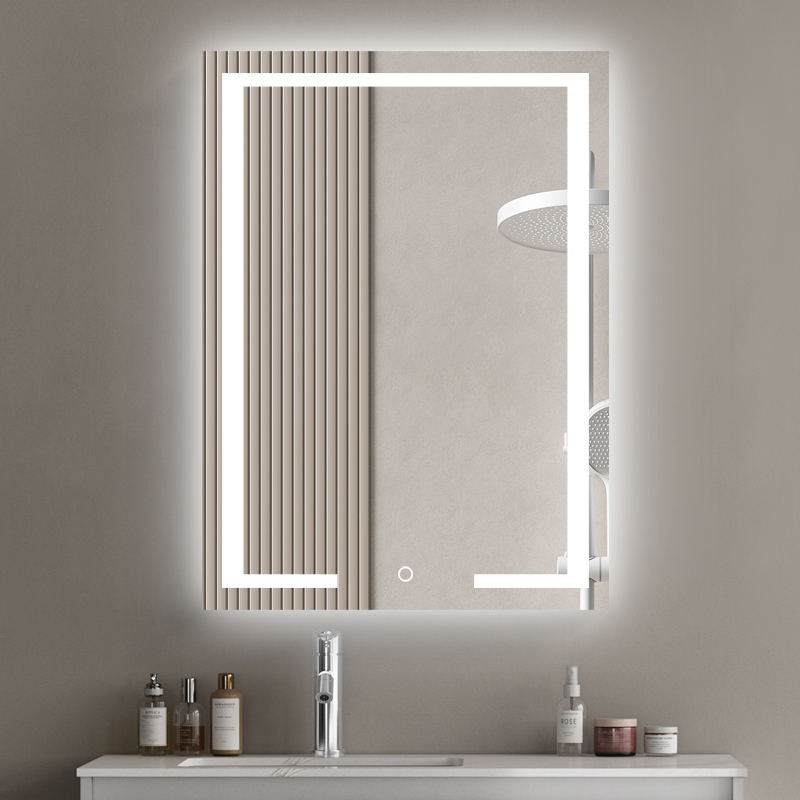
Modern LED bathroom mirrors may also integrate electrical systems, anti-fog technology, and touch controls within the mirror structure itself. These components require careful waterproof integration to ensure both safety and durability.
The answer to mirror is made of what therefore becomes more complex in smart mirror and illuminated mirror applications because manufacturers must combine electronics, lighting systems, and reflective materials into a single reliable product.
At Lofter, our integrated production capabilities allow us to manufacture advanced bathroom mirrors with reliable waterproof protection, precision LED integration, and premium-quality reflective surfaces designed for demanding environments.
How Are Mirrors Manufactured Step by Step?
Understanding what mirrors are made of also requires understanding how mirrors are manufactured. Modern mirror production involves multiple precision-controlled stages to ensure consistent quality and optical clarity.
Glass Production
Mirror manufacturing begins with float glass production, where molten glass is spread into perfectly flat sheets.
Surface Cleaning
Before reflective coatings are applied, the glass must be carefully cleaned to remove dust, oils, and microscopic contaminants.
Reflective Coating Application
Manufacturers then apply reflective metallic layers—typically silver or aluminum—to create the mirror effect.
Protective Backing Layers
Several protective coatings are added to shield the reflective surface from moisture, oxidation, and environmental damage.
Cutting and Edge Processing
The mirror is cut to final dimensions and polished to improve both safety and aesthetics.
Final Inspection
Every mirror should undergo strict quality inspection to ensure reflection accuracy, structural integrity, and coating consistency.
At Lofter, our fully integrated production system allows us to oversee every stage of manufacturing internally. This level of control improves product consistency, reduces defects, and enables efficient customization for residential and commercial customers.
Why Are Advanced Mirror Technologies Changing the Industry?
Modern consumers expect mirrors to offer more than basic reflection. This has significantly expanded innovation in mirror manufacturing and materials technology.
When buyers ask what mirrors are made of, today’s answer increasingly includes advanced technologies such as:
- LED lighting systems
- Anti-fog coatings
- Smart touch controls
- Bluetooth connectivity
- Copper-free reflective coatings
- Energy-efficient lighting integration
Copper-free mirror technology is especially important because it improves environmental sustainability while increasing corrosion resistance. This helps extend product lifespan and reduce maintenance requirements.
Smart mirrors are also transforming residential and commercial interiors by integrating lighting, digital displays, and intelligent functionality directly into mirror surfaces.
At the same time, minimalist design trends continue driving demand for frameless mirrors, hidden lighting systems, and elegant modern aesthetics.
At Lofter, we continuously invest in advanced manufacturing technologies and innovative product development to remain aligned with evolving global design and performance trends. Our vertically integrated production process allows us to maintain reliable quality while adapting quickly to customer requirements.
How Does Integrated Manufacturing Improve Mirror Quality?
The answer to mirror is made of what goes beyond raw materials alone. Manufacturing precision and quality control are equally critical in determining mirror performance and durability.
A fully integrated production system allows manufacturers to oversee:
- Glass processing
- Reflective coating application
- Edge sealing
- LED integration
- Surface finishing
- Final inspection
This level of production control helps ensure stable product quality and consistent manufacturing standards.
Inferior production methods often lead to reflection distortion, moisture damage, coating failure, or premature corrosion. In contrast, precision manufacturing improves durability, optical clarity, and long-term reliability.
At Lofter, our vertically integrated manufacturing process allows us to maintain strict quality standards across every mirror we produce. By managing production internally, we can provide reliable craftsmanship, faster customization capabilities, competitive pricing, and dependable technical support.
For homeowners, hotels, salons, designers, and distributors, partnering with an experienced manufacturer significantly improves sourcing confidence and long-term product satisfaction.
Conclusion
If you’ve ever wondered mirror is made of what, the answer involves much more than simple glass. Understanding what is a mirror made out of, what mirrors are made of, and what are mirrors made out of reveals how reflective coatings, protective layers, and manufacturing quality all contribute to mirror performance and durability.
At Lofter, we combine a fully integrated production line, premium materials, advanced manufacturing technologies, and professional technical support to deliver reliable, stylish, and high-performance mirror solutions. Whether for bathrooms, salons, hotels, or decorative interiors, Lofter remains committed to helping customers create elegant spaces with lasting quality and dependable functionality.

 English
 Español
 Deutsch
 Français
 日本語
 Nederlands
 Português
 한국어
 Italiano
 Svenska