



Unspecified Edges and Backing Can Turn a Premium Mirror into a Liability
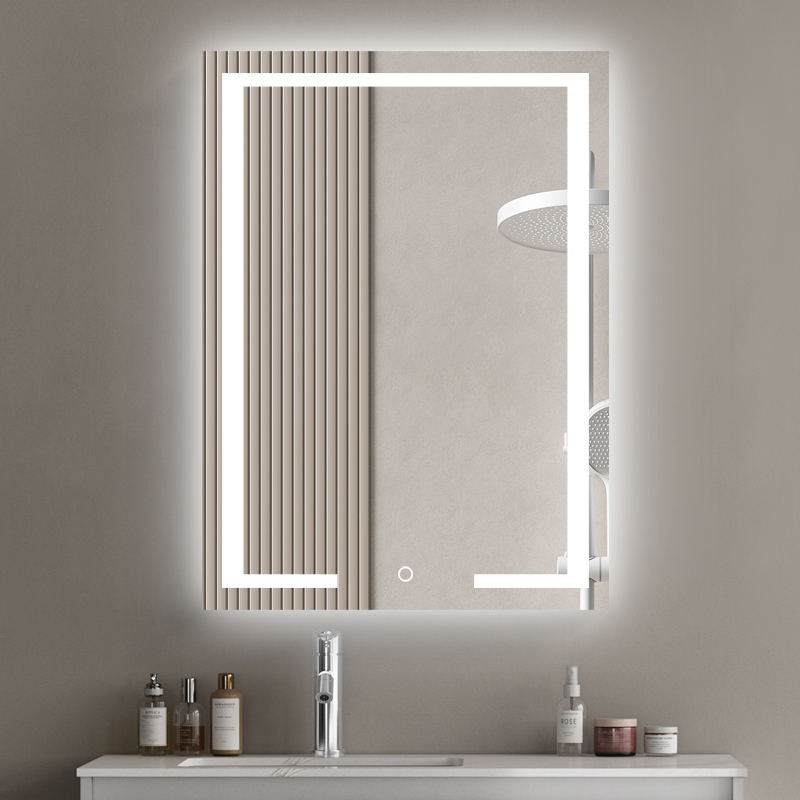
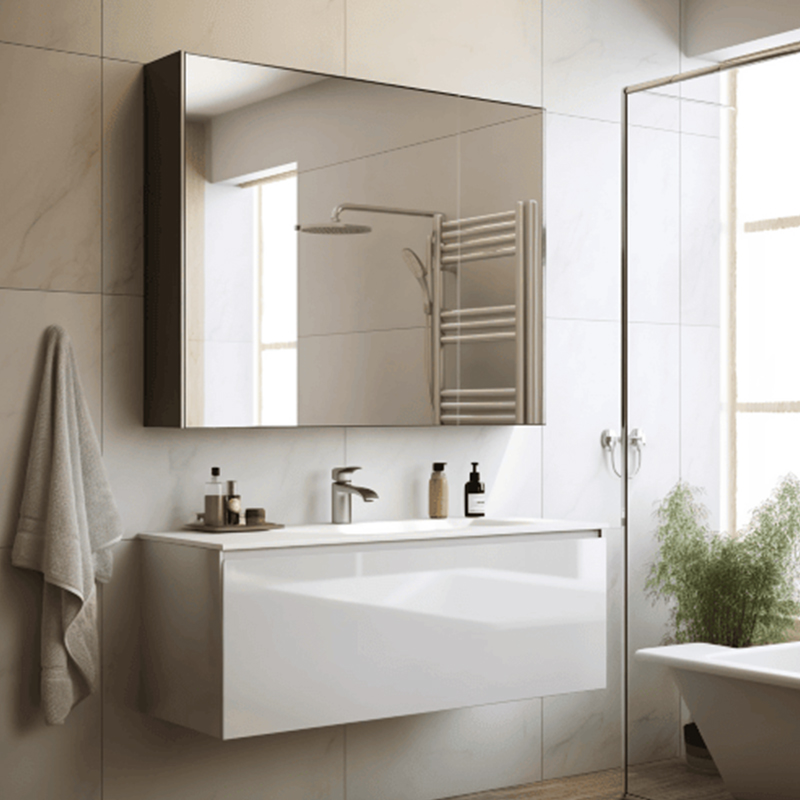
A frameless vanity mirror exposes every edge, corner, and reflection detail, so poor finishing is immediately visible and potentially hazardous. Chipped edges can injure installers or users, inconsistent polishing weakens visual quality, and unsuitable safety backing may fail to retain fragments after breakage. These defects can cause project rejection, replacement costs, delayed installation, and warranty disputes. A clear specification covering glass type, edge profile, corner treatment, safety backing, adhesive compatibility, inspection, and packaging allows buyers to control both appearance and risk before approving samples or mass production.
The best frameless vanity mirror specification defines glass thickness, edge profile, polishing quality, corner geometry, safety-backing performance, adhesive compatibility, mounting method, and acceptance criteria. Our company supports Customizable OEM and ODM projects with coordinated drawings, samples, production inspections, packaging tests, and market-specific documentation.
Choose the Correct Edge Finish for the Application
The edge finish affects appearance, handling safety, installation clearance, and production cost. A professional Manufacturer should identify every exposed and concealed edge on the approved drawing rather than applying one general instruction to the entire mirror.
Common Edge-Finish Options
| Edge Finish | Typical Appearance | Suitable Application | Key Procurement Concern |
|---|---|---|---|
| Seamed edge | Sharpness reduced with limited cosmetic finishing | Fully concealed edges inside frames or channels | Not suitable where the edge remains visible or touchable |
| Arrissed edge | Lightly ground edge with softened corners | Concealed or minimally exposed project applications | Appearance may vary unless the finish is clearly defined |
| Flat polished edge | Straight transparent edge with polished arrises | Modern rectangular frameless mirrors | Requires consistent polish, geometry, and chip control |
| Pencil polished edge | Rounded and smoothly polished profile | Round, oval, and organically shaped mirrors | Profile radius and finish must remain consistent |
| Beveled edge | Decorative angled perimeter reflecting additional light | Hotels, residences, and decorative vanity areas | Bevel width, angle, corner alignment, and silvering quality |
Flat Polished Edges
A flat polished edge is a common choice for a rectangular frameless vanity mirror. The main edge surface should appear even and transparent, while the small arrises on both sides reduce sharpness. Buyers should specify:
- Glass thickness and finished dimensions
- Required polish on each exposed edge
- Acceptable edge-chip size and frequency
- Maximum dimensional and diagonal variation
- Corner profile and radius
- Visual standard for polishing marks, burns, and white lines
Pencil Polished and Shaped Edges
Pencil polishing suits round, oval, capsule, and irregular mirrors because the curved profile follows the perimeter smoothly. CNC processing data should be based on an approved drawing or digital template. Manual interpretation can create inconsistent shapes between production batches.
Shape-Control Points
- Overall width and height
- Radius and tangent locations
- Symmetry around centerlines
- Profile consistency around curves
- Transition quality between straight and curved sections
Specify Corner Safety and Visual Quality
Corners are especially vulnerable during handling, installation, and daily cleaning. A nominally square corner can remain fragile even when its adjoining edges are polished.
Corner Options
- Square corners with polished arrises for precise architectural layouts
- Clipped corners where a small diagonal section removes the sharp point
- Radius corners for improved handling and a softer appearance
- Decorative corners controlled by a full-size template
The approved drawing should identify the radius or clip dimension instead of using descriptions such as slightly rounded. The Supplier should also confirm whether the stated size refers to the glass before or after edge finishing.
Edge and Corner Inspection Checklist
- Clean the mirror and inspect it under consistent illumination.
- Compare overall dimensions, diagonals, and corner geometry with the drawing.
- Check exposed edges for chips, shells, scratches, and incomplete polishing.
- Examine the polish for haze, burns, waves, and inconsistent transparency.
- Run an appropriate handling check without using bare hands on unfinished glass.
- Inspect the reflective coating near processed edges for damage or discoloration.
- Record results against the approved sample and inspection standard.
Understand What Safety Backing Does
Safety backing is normally a film or membrane applied to the rear surface of a mirror. Its primary purpose is to help retain fragments if the glass breaks. It can reduce the risk of large pieces falling away, but its performance depends on the backing material, adhesion, coverage, aging resistance, and installation system.
Safety Backing Is Not Automatically Safety Glazing
A backed mirror should not automatically be described as tempered, laminated, or compliant safety glazing. These are different constructions with different performance characteristics. The project team must determine which glass or backing solution is required by the destination market, installation position, building code, and contract specification.
- Tempered glass is heat treated and breaks differently from ordinary annealed glass.
- Laminated glass uses an interlayer to retain fragments between glass layers.
- Safety-backed mirror uses a rear film intended to hold broken mirror fragments.
- Protective paint or ordinary rear coating does not necessarily provide fragment retention.
Safety-Backing Specification Checklist
| Control Item | Requirement to Define | Reason for Control |
|---|---|---|
| Backing material | Film construction, thickness, and approved product reference | Prevents unapproved material substitutions |
| Coverage | Full rear coverage or documented exclusion zones | Controls fragment retention across the mirror |
| Adhesion | Initial and aged adhesion acceptance criteria | Reduces peeling during service or breakage |
| Moisture resistance | Performance after agreed humidity and condensation exposure | Supports bathroom durability |
| Adhesive compatibility | Approved mounting products and application areas | Avoids film softening, staining, or bond failure |
| Identification | Batch, date, material, and inspection traceability | Supports quality investigation and change control |
| Breakage performance | Agreed fragment-retention test and acceptance result | Verifies the intended safety function |
Coordinate Safety Backing with the Mounting System
The rear film changes the surface to which adhesive or tape is applied. A product that bonds securely to mirror paint may not provide the same performance on a polymer film. Compatibility must be confirmed using the actual production materials.
Adhesive-Mounted Mirrors
- Use only mirror-compatible adhesive approved for the backing material.
- Confirm adhesion to both the film and wall substrate.
- Define bead size, spacing, coverage, and curing conditions.
- Avoid solvents that can attack mirror coating or safety film.
- Provide temporary support during the complete curing period.
- Do not bridge building joints with rigid glass or adhesive.
Mechanically Supported Mirrors
Channels, clips, rails, or standoffs should support the product without concentrating stress on an edge or corner. Pads and gaskets can separate glass from metal, while correctly positioned blocking transfers the load into the wall structure.
Installation Controls
- Verify substrate flatness before mounting.
- Confirm fastener type and wall reinforcement.
- Keep clips secure without overtightening them against the glass.
- Provide suitable edge clearance for installation and building movement.
- Prevent water from collecting in channels or behind the mirror.
- Follow local requirements for mirror location and retention.
Protect the Reflective Coating Around Edges and Cutouts
Edge processing, drilling, cleaning chemicals, and bathroom moisture can damage the reflective coating. Problems often begin near exposed edges, holes, or cutouts and later appear as black spots or corrosion.
Coating-Protection Requirements
- Use clean processing water and controlled grinding equipment.
- Prevent scratches to the rear coating during handling.
- Keep edge sealants compatible with the mirror coating and safety backing.
- Control minimum distances between holes, cutouts, and glass edges.
- Avoid unsupported cutouts and sharp internal corners.
- Evaluate humidity resistance using the actual finished construction.
For a frameless vanity mirror installed near a basin, the cleaning procedure should avoid aggressive chemicals and saturated edges. Care instructions should identify suitable cleaners and prevent liquid from remaining along the lower edge.
Validate the Finished Mirror Before Mass Production
Material certificates alone cannot confirm the quality of the assembled product. A production-representative sample should combine the specified glass, edge finish, coating, backing, hardware, and packaging.
- Approve the engineering drawing and visible-edge map.
- Confirm glass thickness, mirror coating, and backing construction.
- Measure dimensions, diagonals, radii, holes, and cutouts.
- Inspect edge and corner quality under defined lighting.
- Evaluate backing adhesion and moisture resistance.
- Conduct the agreed fragment-retention assessment.
- Test the proposed adhesive or mechanical mounting system.
- Validate packaging through the intended distribution method.
- Seal a golden sample for production comparison.
Control Production and Component Changes
A Wholesaler or project buyer should require written approval before the factory changes the mirror substrate, rear coating, safety film, adhesive, edge-processing method, or packaging construction. Even a visually similar substitute can change adhesion, corrosion resistance, or breakage behavior.
Recommended Quality Records
- Approved product drawing and edge-finish schedule
- Critical material and component list
- Safety-backing data and incoming inspection record
- Edge and dimensional inspection results
- Humidity and adhesion test reports
- Fragment-retention evaluation records
- Golden sample photographs and approval date
- Batch traceability and change-authorization history
As an export-focused Manufacturer and Supplier, our company can coordinate Customizable mirror shapes, edge profiles, corner details, safety backing, mounting hardware, inspection criteria, and packaging. OEM and ODM specifications are developed around the buyer’s design, installation method, sales channel, and destination-market requirements.
Finalize a Safer Frameless Mirror Specification
Send us your dimensions, edge profile, corner design, mounting method, target market, and order quantity. Request an OEM or ODM review today to receive a coordinated sample, safety-backing, inspection, and packaging proposal for your frameless vanity mirror project.
 English
 Español
 Deutsch
 Français
 日本語
 Nederlands
 Português
 한국어
 Italiano
 Svenska