



Hotel bathroom mirror procurement involves more than choosing a size and appearance. If an FF&E specification misses lighting, electrical details, mounting, materials, packaging, or quality requirements, suppliers may quote different products under the same description. This creates comparison problems, design changes, installation delays, and costly replacements. A structured LED bathroom mirror specification gives hotel owners, designers, purchasing teams, and contractors a common technical baseline. It also helps a Manufacturer and Supplier understand the project correctly before samples, quotations, and mass production begin.
A hotel LED bathroom mirror specification should define dimensions, glass, lighting, electrical configuration, functions, mounting, materials, packaging, quantity, customization, and quality requirements. Lofter supports OEM and ODM hotel mirror projects with integrated manufacturing and in house testing.
What Should a Hotel LED Bathroom Mirror Specification Include?
A good specification should work as a technical reference throughout design, quotation, sampling, purchasing, production, inspection, and installation. The goal is not to create unnecessary paperwork. The goal is to prevent different parties from interpreting the same product differently.
- Product dimensions and shape
- Glass and reflective surface requirements
- LED lighting configuration
- Electrical and control functions
- Frame, backing, and hardware requirements
- Mounting and installation method
- Packaging and shipping requirements
- Quantity and project schedule
- OEM, ODM, or Customizable requirements
- Inspection and acceptance criteria
Define the Physical Specification of the LED Bathroom Mirror
Hotel projects often involve repeated room layouts, so dimensional consistency is critical. The specification should clearly identify the finished mirror dimensions and the installation orientation rather than relying only on a product image or drawing.
Dimensions and Shape
- Overall width and height
- Mirror thickness
- Shape and corner geometry
- Required edge treatment
- Mounting hole or bracket positions
- Clearances required around the installation area
For irregular or Customizable designs, provide a dimensioned technical drawing whenever possible. This reduces interpretation errors during quotation and sample development.
Glass and Surface Requirements
The specification should also describe the glass construction and visible surface requirements. Hotel buyers should identify expectations for clarity, appearance, edge quality, reflective performance, and consistency between production batches.
Specify LED Lighting and Electrical Requirements
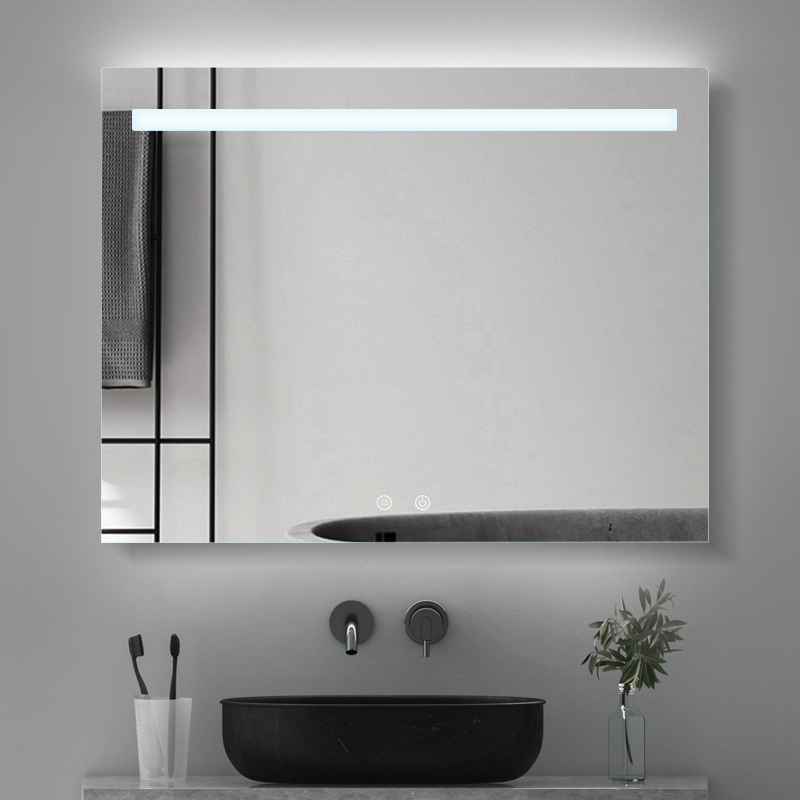
Lighting is one of the most important differences between a conventional bathroom mirror and an LED bathroom mirror. Hotel FF&E teams should specify the complete lighting concept instead of simply writing LED lighting required.
| Specification Area | Information to Define | Why It Matters |
|---|---|---|
| Light position | Front, back, perimeter, or combined | Determines appearance and installation expectations |
| Light control | Switch, sensor, touch, or project requirement | Affects user experience and wiring |
| Color function | Single or adjustable lighting concept | Supports consistent room design |
| Electrical configuration | Power and connection requirements | Supports site installation planning |
| Additional functions | Demisting, display, or other approved functions | Changes product construction and testing needs |
Electrical requirements should be confirmed before the quotation stage. Changes introduced after tooling, sampling, or production can affect components, wiring, assembly, cost, and lead time.
Define Hotel Installation and Mounting Requirements
Even a well designed mirror can create project problems if its mounting system does not match the site conditions. FF&E specifications should therefore describe how the mirror will be installed and what information the installation team will receive.
Important Installation Information
- Wall mounted or other approved installation method
- Bracket or mounting hardware requirements
- Approximate installation position
- Cable exit and connection requirements
- Required installation clearance
- Installation instructions and hardware package
For hotel developments, repeatability matters. A specification should allow installers to reproduce the intended installation across multiple rooms with minimal interpretation.
Include Quality and Environmental Requirements
Hotel bathrooms are exposed to humidity, condensation, frequent cleaning, and repeated daily use. Therefore, an LED bathroom mirror specification should address environmental and functional reliability rather than focusing only on visual appearance.
Recommended Evaluation Areas
- Glass and reflective surface appearance
- Frame and hardware condition
- LED lighting performance
- Electrical functionality
- Moisture and condensation resistance requirements
- Corrosion resistance where applicable
- Mounting stability
- Packaging protection
The exact acceptance criteria should be agreed between the buyer and Supplier before mass production. This gives the inspection team a clear reference and reduces disputes over subjective quality judgments.
Build Packaging Requirements Into the Specification
Hotel mirrors are large, fragile, and often shipped internationally. Packaging should therefore be treated as part of the product specification rather than a logistics detail handled after production.
- Define individual mirror protection requirements.
- Identify vulnerable glass edges and corners.
- Specify internal cushioning or separation requirements where needed.
- Define carton or outer packaging expectations.
- Confirm labeling and project identification requirements.
- Review packaging performance during sample evaluation.
For a Wholesaler or hotel procurement team, packaging quality directly affects installation efficiency because damaged units can create room delays, replacement shipments, and additional labor.
Use a Clear Specification Structure for Hotel Procurement
A practical hotel specification can be organized into several purchasing fields. This makes it easier for the FF&E team to compare quotations from different suppliers on the same basis.
| Specification Category | Buyer Should Confirm | Supplier Response |
|---|---|---|
| Product | Model, dimensions, shape | Confirmed or proposed design |
| Glass | Construction and appearance | Material and processing details |
| Lighting | Position, function, control | LED configuration and options |
| Electrical | Power and connection requirements | Electrical configuration |
| Mounting | Installation method | Hardware and installation details |
| Packaging | Protection and labeling | Packaging proposal |
| Quality | Inspection and acceptance criteria | Testing and QC process |
| Commercial | Quantity and delivery schedule | MOQ, price, and lead time |
How FF&E Teams Should Finalize the Specification
The specification should become a controlled project document rather than an informal email attachment. A simple approval process can reduce changes after production begins.
- Collect the architectural and interior design requirements.
- Convert design intent into measurable product specifications.
- Send the specification to selected suppliers for technical review.
- Compare quotations based on the same specification.
- Review and approve the production sample.
- Freeze the approved configuration before mass production.
- Use the approved specification during quality inspection.
- Keep the final version as the reference for repeat orders.
This workflow is particularly useful for OEM and ODM hotel programs where the mirror may be developed specifically for a brand, room concept, or property design.
How Lofter Supports Hotel LED Bathroom Mirror Projects
Lofter provides integrated manufacturing covering cutting, coating, assembly, and wiring, with an independent glass hardware processing and assembly workshop. This structure allows product requirements to be coordinated across multiple manufacturing stages instead of being managed through disconnected suppliers.
Lofter also has in house testing for durability, lighting performance, and safety, supported by two electrical R&D teams and four QCS. For hotel FF&E teams, this provides a practical manufacturing partner for projects requiring consistent specifications, OEM development, ODM cooperation, or Customizable LED bathroom mirrors.
What Buyers Can Provide to Start a Project
- Dimensioned drawings or design references
- Lighting and functional requirements
- Installation information
- Estimated project quantity
- Packaging expectations
- Target delivery schedule
- OEM or ODM development requirements
A complete specification helps both the buyer and Manufacturer move from design intent to a controlled production plan with fewer assumptions.
Turn Your Hotel Mirror Specification Into a Procurement Tool
A strong hotel LED bathroom mirror specification aligns design, purchasing, manufacturing, inspection, and installation. Build your specification around measurable requirements, then send it to Lofter for OEM, ODM, or Customizable project evaluation and quotation.



 English
 Español
 Deutsch
 Français
 日本語
 Nederlands
 Português
 한국어
 Italiano
 Svenska