



Ever looked in a mirror and wondered why your reflection sometimes feels different from photos or real-life appearances?
Many people ask, are mirrors accurate or is a mirror accurate because reflections can appear slightly different depending on mirror quality, lighting, angle, and glass manufacturing. The answer is that high-quality flat mirrors provide the most accurate reflections, while lighting and distortion greatly affect how we perceive ourselves.
Let’s explore how mirrors work, why reflections vary, and what mirror is the most accurate for everyday use.
Are Mirrors Accurate in Showing Your Real Appearance?
One of the most common questions consumers ask is, are mirrors accurate when reflecting how we truly look. Scientifically, a properly manufactured flat mirror reflects light accurately according to the laws of physics. However, perception, lighting, and mirror quality can all influence how that reflection appears.
A flat mirror reverses images horizontally, which is why your reflection may look unfamiliar compared with photographs or how others see you. This often leads people to question, is how i see myself in the mirror accurate when comparing reflections with camera images.
Mirror accuracy also depends heavily on manufacturing quality. Poorly made mirrors can create subtle distortions due to uneven glass surfaces or inferior reflective coatings. These imperfections may slightly stretch or compress facial features and body proportions.
Lighting conditions additionally affect perception. Harsh overhead lighting, dim environments, or uneven illumination can dramatically change how skin tone, facial structure, and overall appearance look in a mirror.
At Lofter, we manufacture premium mirrors using high-quality float glass and advanced reflective coating technologies to ensure exceptional reflection clarity and minimal distortion. Our fully integrated production line allows us to maintain consistent optical accuracy across every mirror product.
Is a Mirror Accurate Compared With Photos and Cameras?
Many people wonder, is a mirror accurate compared with smartphone photos or professional cameras. The answer is more complex than most expect because mirrors and cameras capture images differently.
A mirror reflects a live, three-dimensional image in real time, while cameras flatten depth into a two-dimensional photograph. Camera lenses can also distort proportions depending on focal length, shooting angle, and lighting conditions. Wide-angle smartphone lenses, for example, often exaggerate facial features at close distances.
Another reason people ask is how i see myself in the mirror accurate is because humans become familiar with their mirrored reflection over time. Since mirrors reverse images horizontally, seeing a non-reversed photo may feel unusual or less familiar even though it may actually represent how others see you.
High-quality mirrors remain one of the most reliable ways to evaluate personal appearance because they provide continuous real-time reflection without digital processing or lens distortion. However, proper lighting and viewing distance are essential for the most natural results.
At Lofter, we focus on precision manufacturing and optical clarity to help customers achieve more accurate and visually comfortable reflections for bathrooms, salons, dressing areas, and commercial environments.
What Mirror Is the Most Accurate for Reflection Quality?
Consumers frequently ask, what mirror is the most accurate when selecting mirrors for grooming, makeup application, salons, or professional use. The answer depends largely on mirror type, glass quality, and manufacturing precision.
Flat Mirrors
Flat mirrors are considered the most accurate because they reflect images without intentional magnification or curvature distortion.
High-Quality Float Glass Mirrors
Premium float glass provides smoother surfaces and improved reflection consistency compared with low-grade glass.
Silver-Coated Mirrors
Silver-backed mirrors often produce brighter and more accurate reflections than lower-cost reflective coatings.
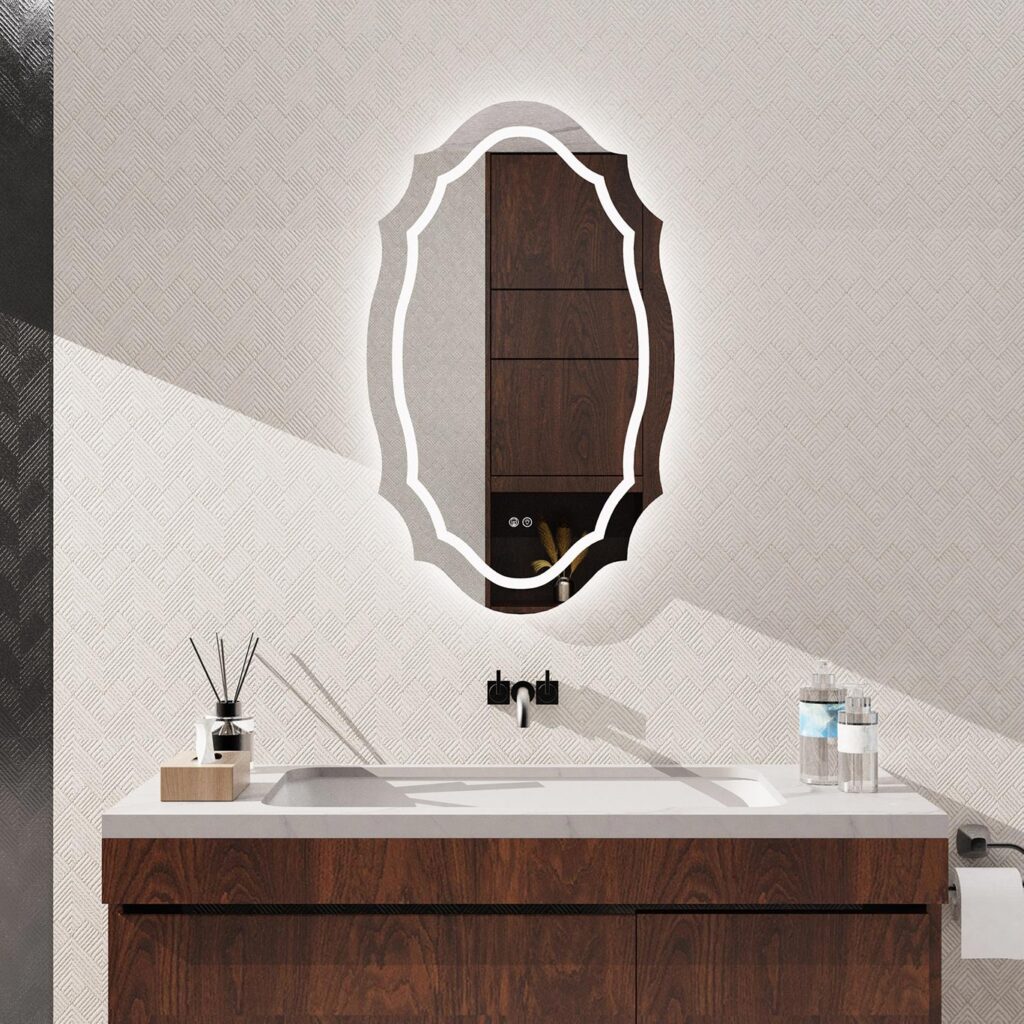
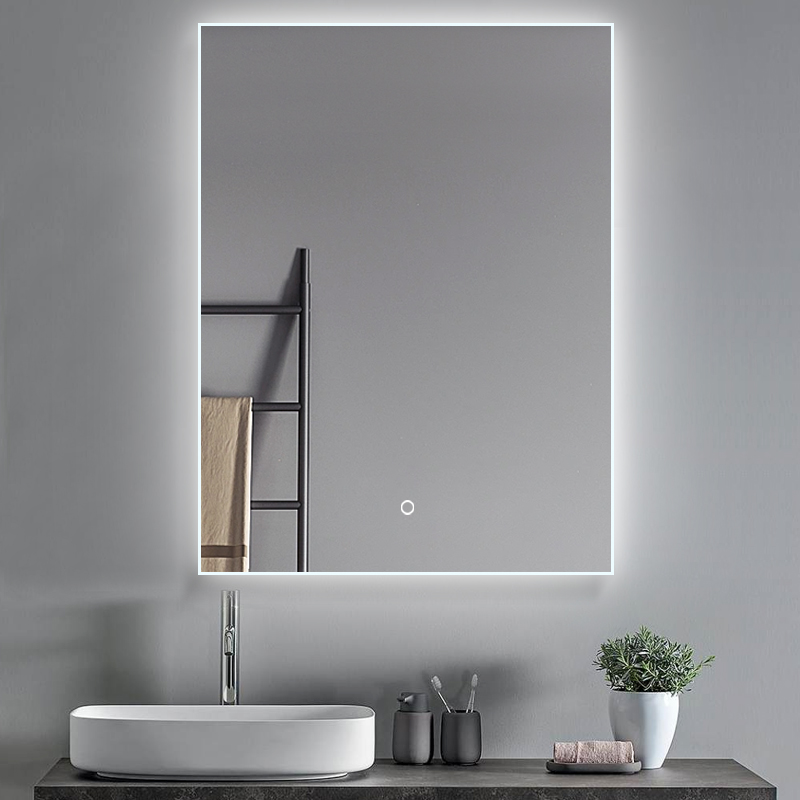
LED Mirrors With Balanced Lighting
Proper lighting significantly improves visual accuracy. LED mirrors with even illumination reduce shadows and color distortion.
Low-Iron Glass Mirrors
Low-iron mirrors reduce the green tint commonly found in standard glass, improving color accuracy and reflection clarity.
Curved mirrors, magnifying mirrors, and decorative mirrors may intentionally alter perspective for specific functions, but they are not ideal for fully accurate reflection.
At Lofter, our integrated production process allows us to manufacture premium mirrors with distortion-free glass, precision reflective coatings, and advanced lighting integration for highly accurate visual performance.
Why Does Lighting Affect Mirror Accuracy So Much?
Even if a mirror itself is technically accurate, lighting conditions strongly influence how reflections appear. This is one of the biggest reasons people continue asking, are mirrors accurate in daily life.
Bright overhead lighting can create strong facial shadows, making features appear harsher or more uneven. Warm lighting changes skin tone perception, while cool lighting may exaggerate texture and contrast.
Natural daylight generally provides the most balanced and realistic appearance. This is why luxury bathrooms, salons, and dressing rooms increasingly use LED mirrors with adjustable color temperatures to simulate different lighting environments.
The answer to is a mirror accurate therefore depends not only on mirror quality but also on surrounding environmental conditions. A premium mirror combined with poor lighting may still produce visually misleading reflections.
Modern LED mirror technology greatly improves this issue by distributing illumination evenly across the face and reducing unwanted shadows. Backlit and front-lit mirrors are especially effective for grooming and makeup applications.
At Lofter, we integrate advanced LED lighting systems into our mirror designs to improve reflection clarity, visual comfort, and overall user experience across residential and commercial interiors.
Is How I See Myself in the Mirror Accurate Psychologically?
The question is how i see myself in the mirror accurate also involves psychological perception, not just optical science. Human self-image is influenced by familiarity, emotion, confidence, and visual habits.
Because people see their mirrored reflection daily, the reversed image becomes psychologically familiar. When viewing non-reversed photographs, the difference may feel uncomfortable even though others typically see that version of your appearance.
Emotional state can additionally affect perception. Stress, low confidence, or harsh lighting may cause individuals to focus more heavily on perceived imperfections while overlooking overall appearance balance.
This explains why two people looking into the same mirror may perceive themselves very differently despite identical reflection accuracy. Mirror quality matters, but personal psychology also strongly shapes interpretation.
High-quality mirrors with balanced lighting and distortion-free glass help create more natural and comfortable reflections, improving confidence and reducing visual inconsistencies.
At Lofter, we understand that mirrors influence not only functionality but also emotional experience and interior atmosphere. Our precision manufacturing approach helps deliver visually balanced and aesthetically pleasing mirror solutions for modern lifestyles.
How Does Manufacturing Quality Affect Mirror Accuracy?
The accuracy of a mirror depends heavily on manufacturing precision. Inferior production methods can create subtle distortions that affect visual appearance even if they are not immediately obvious.
When consumers ask what mirror is the most accurate, manufacturing quality becomes one of the most important factors. Key production stages influencing mirror accuracy include:
- Glass flatness
- Reflective coating consistency
- Surface polishing precision
- Edge finishing quality
- Frame stability
- Lighting integration accuracy
Low-quality mirrors may contain waves, bends, or uneven reflective layers that slightly distort reflected images. These defects are especially noticeable in large mirrors or commercial applications.
At Lofter, our fully integrated production line allows us to oversee every manufacturing stage internally. This level of control helps ensure stable optical clarity, reliable durability, and premium reflection accuracy across all mirror categories.
By combining advanced production technologies, strict quality inspection, and premium materials, we provide mirror solutions trusted by homeowners, salons, hotels, designers, and commercial buyers worldwide.
Conclusion
Questions such as are mirrors accurate, is a mirror accurate, what mirror is the most accurate, and is how i see myself in the mirror accurate all highlight the importance of mirror quality, lighting conditions, and manufacturing precision. High-quality flat mirrors with balanced lighting provide the most realistic and reliable reflections for both residential and commercial environments.
At Lofter, we combine a fully integrated production line, premium materials, advanced manufacturing technologies, and professional technical support to deliver reliable, stylish, and high-performance mirror solutions. Whether for bathrooms, salons, hotels, or decorative interiors, Lofter remains committed to helping customers experience clearer reflections, elegant design, and lasting quality.


 English
 Español
 Deutsch
 Français
 日本語
 Nederlands
 Português
 한국어
 Italiano
 Svenska